
In the broad disciplines of genetic engineering, bioengineering, and synthetic biology, plasmids are important instruments enabling scientists to manipulate genes. These small, circular DNA molecules, naturally found in bacteria, have become indispensable tools for researchers seeking to insert and transfer specific genes across organisms, giving organisms unique traits they would otherwise lack.
What is a Plasmid?
A plasmid is a small, circular DNA molecule that replicates independently within a host cell. Most often, this host cell is from specific bacteria like E. coli or a broader species such as Actinobacteria. Unlike chromosomal DNA, plasmids are not essential for the survival of the host cell. Instead, they code for various advantageous traits, such as antibiotic resistance or the ability to produce specific proteins. Think of a plasmid as a mini DNA toolkit that can be inserted into other bacterial species.
Why Are Plasmids Used?
Plasmids are widely used in genetic engineering and biotechnology for gene cloning, allowing the insertion of foreign DNA. The use of foreign DNA permits researchers to clone genes of interest for extended study. Scientists can also employ plasmids to produce proteins of interest, like insulin for diabetes treatment. Finally, plasmids are essential components in modern gene editing techniques like CRISPR-Cas systems.
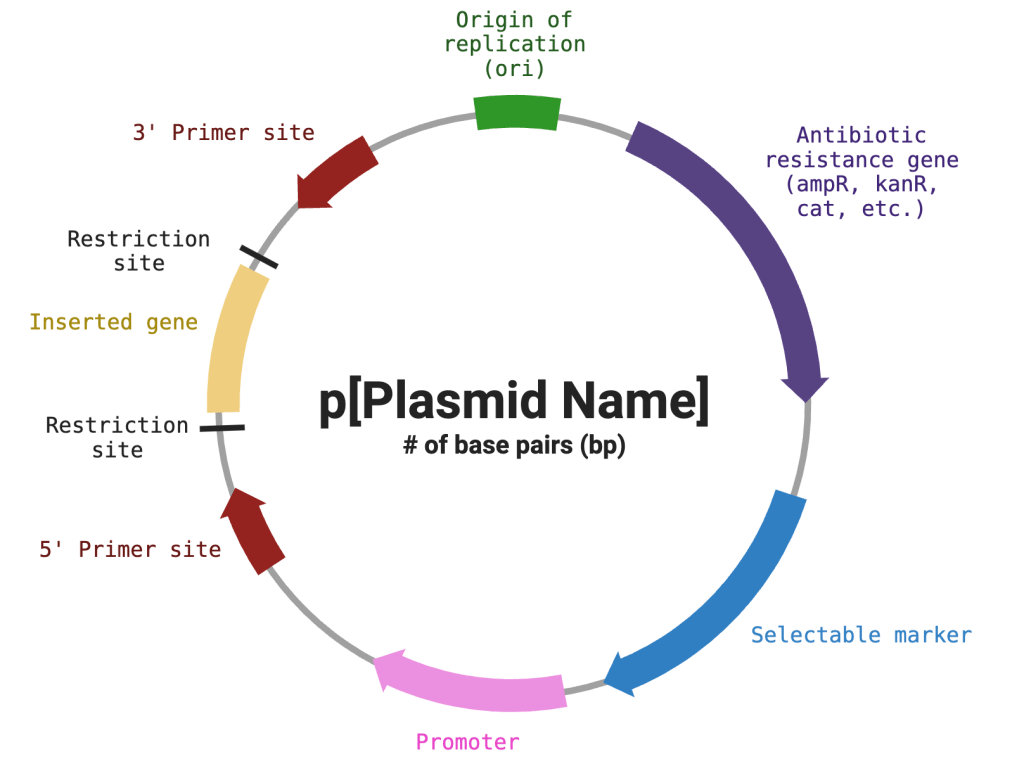
Key Components of Plasmids
1. Origin of Replication (ori): The origin of replication is a DNA sequence that initiates plasmid replication within a host cell, like a “start” button. The ori is essential for ensuring that the plasmid is copied and passed on to daughter cells during cell division.
2. Antibiotic Resistance Gene: Plasmids often carry genes providing resistance to antibiotics like ampicillin, penicillin, or chloramphenicol. These genes allow researchers to selectively grow bacteria containing the plasmid by culturing them in the presence of antibiotics. Cells lacking the plasmid will not survive, causing the isolation of bacteria containing the desired plasmid.
3. Selectable Marker: A selectable marker is a gene that distinguishes cells that have successfully taken up the plasmid from those that have not. Antibiotic resistance genes are common selectable markers, but other genes can also encode for cell wall development or make the bacteria dependent on a specific nutrient. Bacteria without the plasmid die, leaving only cells with plasmid behind.
4. Promoter: The promoter is a DNA sequence that initiates transcription of the inserted gene or the gene of interest. A promoter is like a “go” signal for the cell to start making the protein coded by the gene.
5. 5′ Primer Site: This site on the plasmid is used for binding the 5′ end of a primer during polymerase chain reaction (PCR) amplification or sequencing.
6. Inserted Gene: The inserted gene, also known as the gene of interest, is the DNA sequence that researchers aim to clone or express using the plasmid.
7. 3′ Primer Site: Similar to the 5′ primer site, the 3′ primer site facilitates binding of the 3′ end of a primer during PCR or sequencing.
8. Restriction Sites: Restriction sites are specific DNA sequences recognized by restriction enzymes. Think of these as molecular scissors. They help scientists cut and paste DNA into the plasmid, taking only what the researcher wants to include and excluding everything else.
Applications of Real Plasmids
Real plasmids are built by molecular biologists, synthetic biologists, and genetic engineers working in research laboratories and biotechnology companies.
In the Cancer Immunology classes at Western Reserve Academy, students learn how to construct plasmids and perform restriction digests using the restriction enzymes mentioned above. In CL Synthetic Biology, almost all of the research projects in the class build plasmids to transfer traits from one bacteria to another. Whether taking degradation genes and inserting them into a new bacteria or producing leptin or collagen with powerful protein producers, plasmids are a key aspect of synthetic biology research.
Plasmids might be tiny, but they play a big role in shaping the future of science and technology. By understanding the components of plasmids, researchers harness the power of these miniature DNA vectors to develop innovative biotechnological solutions.
 BioBlab
Leave a comment