
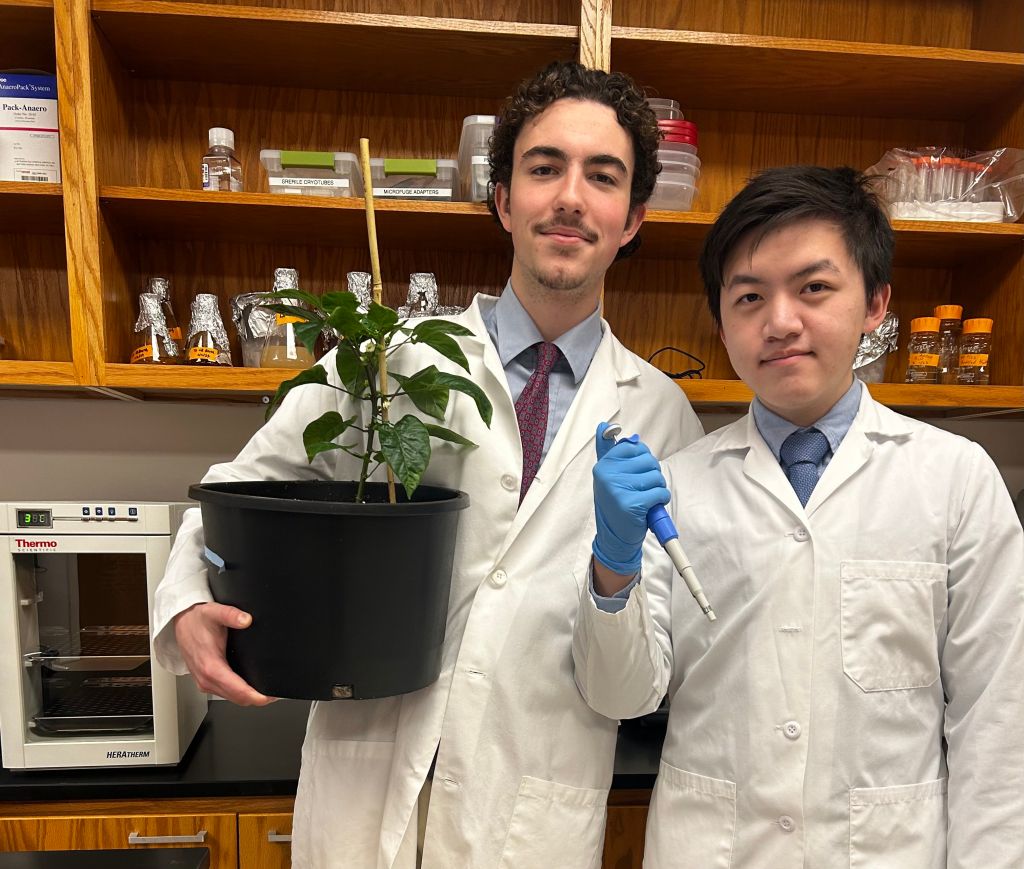
WRA student research presented at MIT by David Hu ’24 and Fernando Bermúdez ’24 suggests that engineering vitamin D into genetically modified bell peppers may serve as a sustainable solution to vitamin deficiencies worldwide.
On March 14, 2024, students from Western Reserve Academy’s Synthetic Biology I and II class presented research at the Massachusetts Institute of Technology as part of the BioBuilder program.
One of the Synthetic Biology II groups introduced the possibility of bioengineering vitamin D into bell peppers to address vitamin D deficiency.
The group, made up of seniors David (Junning) Hu ’24 and Fernando Bermúdez ’24, sought to address vitamin D deficiency in many countries due to dietary, financial, and lifestyle factors. Vitamin D is crucial for maintaining bone health, regulating calcium levels, and supporting overall well-being, and without it, various groups suffer.
“I see a major group is the population of vegans because they don’t consume meat, and they cannot have [typical] access to vitamin D,” Hu stated.
After Hu explored the issue with a group of Synthetic Biology I students in the 2022-2023 school year, Bermúdez joined the project and began conducting experiments to enhance nutrient levels in peppers.
Bermúdez’s tip for developing a robust research project in Synthetic Biology? “Start looking for new ways of tackling the problem.”
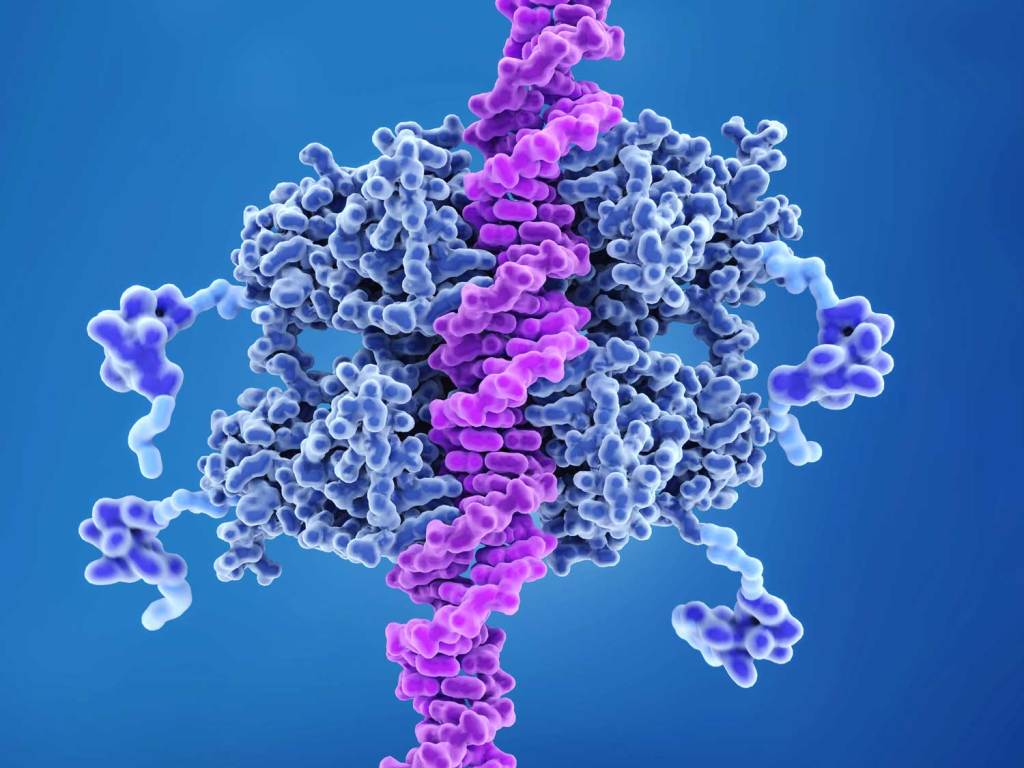
At the heart of the project’s core is the CRISPR-Cas9 Knockout procedure. The technology, which uses the Cas-9 enzyme to cut genetic sequences and remove genes, was used to target the 7-Dehydrocholesterol Reductase 2 (7-DR2) gene.
The 7-DR2 gene normally converts 7 Dehydrocholesterol (7-DHC) to cholesterol. By stopping the gene’s function, Hu and Bermúdez aim to accumulate 7-DHC in peppers. When exposed to sunlight, 7-DHC in the fruit could be converted into vitamin D3, increasing the amount of vitamin D found in each pepper.
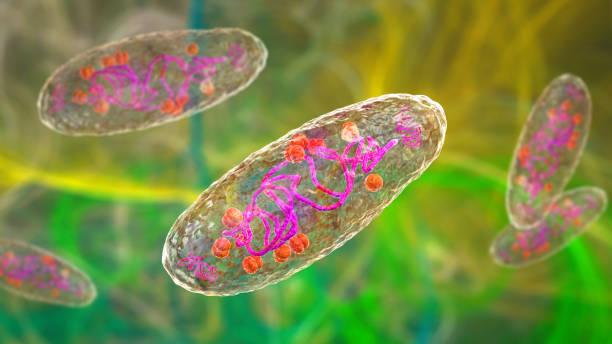
After tedious months of growing 12 plants of Carolina Wonder, Charleston Bell, and Doe Hill Golden Bell peppers, Hu and Bermúdez grew the pHEE401E plasmid in E. coli bacteria and extracted the plasmid using a Bio-Rad Quantum miniprep kit. The pair used gel electrophoresis to confirm a successful result, then attempted to insert guide RNA targeting the 7-DR2 gene in order to proceed with the CRISPR-Cas9 Knockout.
With the edited 7-DR2 gene that can no longer produce cholesterol, the pair envisioned using another bacteria, Agrobacterium, to receive the gene. The plants would then be infected with Agrobacterium before growing, resulting in safe bell pepper growth with a faulty 7-DR2 gene.
While the pair ran into challenges along the way, including the need for new pHEE401E-carrying bacteria to extract a greater stock of plasmid, their next steps include performing the CRISPR-Cas9 Knockout and using an assay to measure the final concentration of vitamin D in the bell peppers.
Comparing the concentration to non-modified peppers would uphold or disprove the hypothesis that the procedure will produce a sizable difference in vitamin D production.
If successful, genetically enhanced bell peppers could serve as a natural and sustainable source of vitamin D, reducing reliance on supplements, sunlight, and diet programs. Through ongoing high school research, this project exemplifies the intersection of learning and societal impact, offering a creative solution to a pressing global health concern.
Hu and Bermúdez also noted that this method could be applied to other foods in the solanaceous family that peppers belong to, such as peppers, chilies, and potatoes.
Right before Spring Break, the pair presented all of these findings in a poster at MIT, where dozens of BioBuilder program teams joined to give brief talks, suggest improvements in each other’s work, and offer praise. At the end of the year, Hu and Bermúdez’s project will also be published in BioTreks, a peer-reviewed high school journal.
Reflecting on his time at MIT, Hu remarked, “I think the most interesting part is when you talk with people who wrote those very marvelous, impressive papers.”
Both Hu and Bermúdez greatly appreciated the mentorship and experiences they gained in the BioBuilder program at MIT, and learned much from the trip.
When asked what advice he had to give to students aspiring to take on similar projects in CL Synthetic Biology, Bermúdez declared, “Go for it… the more years you’re there, the more you gain.”
In their final year together, Hu and Bermúdez aim to finish their research in cultivating a brighter, healthier future of vitamin D for all.
10/30/24 update: David Hu and Fernando Bermúdez’s article is now published here!

 BioBlab
Leave a comment